2024
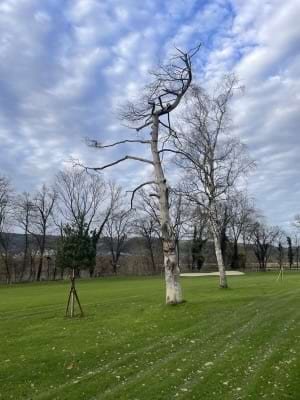
Nach em extrem trockene Summer 2020 isch es Fööräbäum uf üsem Golfplatz vollständig usgetrocknet und gstorbe. Statt eifach z entferne, händ mir entschide, dr Baum stah z’lah und en in es Wuchtäli für di einheimischi Tierwält z verwandle.
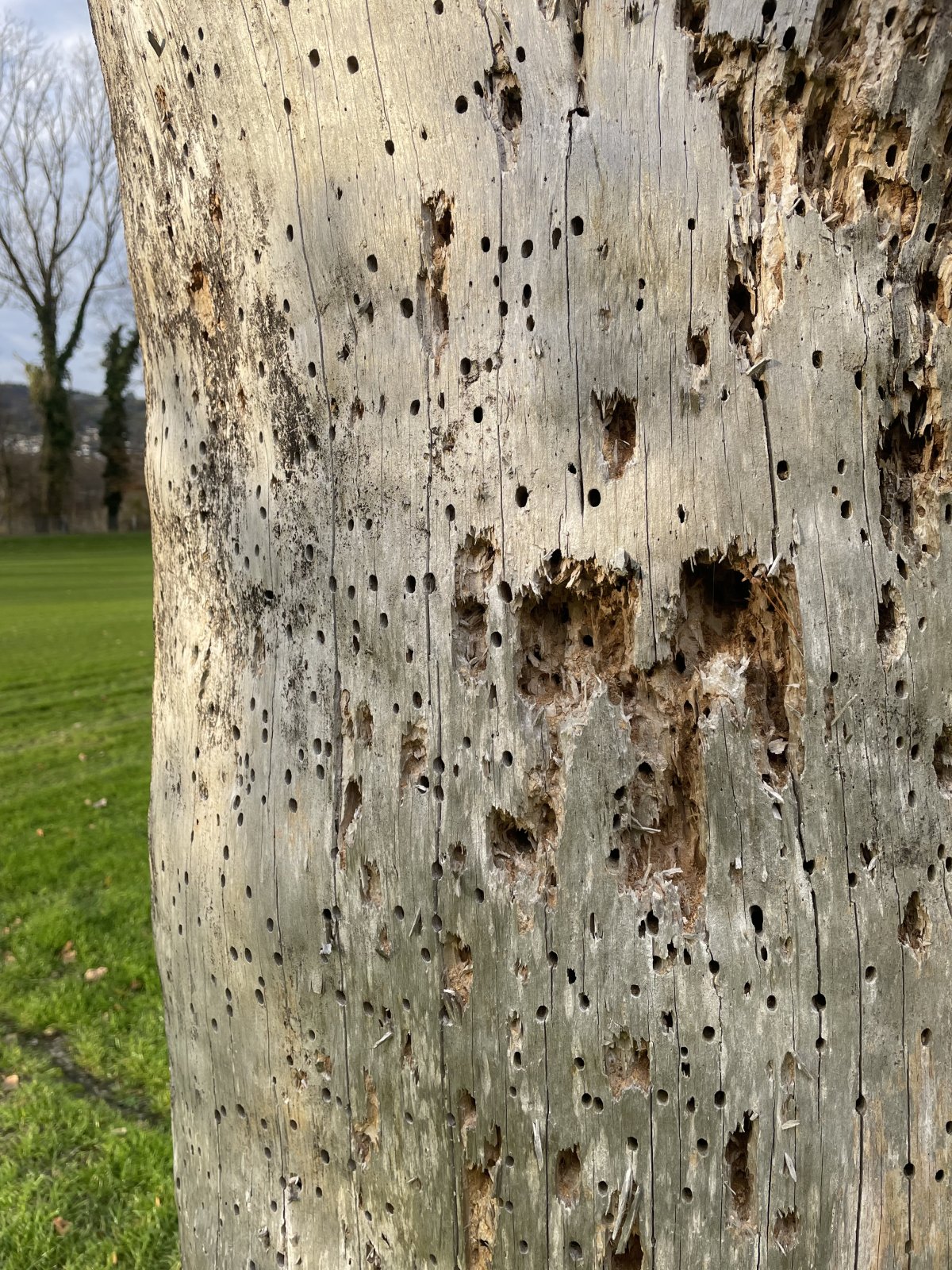
D Vorzüüg vo dere Entscheidig si scho jetz sichtbar: Vilächtli händ sich i dr Stamme eingenistet, und d Baumchrone dient als Rückzugsort für unterschidlichi Vogelarte. Totholz wie das spilt e wichte Roli in natürelne Ökosysteme, wo s Futter, Schutzhüüsli und Brutorte für zahlrichi Organisme bietet.
D Biodiversitätsvorteil vo Totholz uf em Golfplatz:
- Insekten-Wuchtäli: Totholz zieht viu verschideni Insekte aa, wie Chäfer, Ameise und Biene, wo wichteg si für d Bestäubig und d natürligi Nahrungsketti.
- Vogelparadies: Vogel wie d'Specht, d'Spätzli oder d’Eule nutze tote Bäume zum Brüüte und Schtöcke, was d Möglichkeite für Vogelbeobachtig uf em Golfplatz vergrössert.
- Pilzwachstum: Pilz wachse gärn uf verwesendem Holz, baue es ab und bereichere dr Bode mit Nährstoff, wo d Gsundheit vo Pflanze fördere.
- Schlupfwinkel für chlii Tierli: Totholz bietet Schutz für chlii Tierli wie d'Igel, wo Insekte fresse und so zur Schädlingstreggle beiträge.
- Verbesserti Ökosystem-Balance: Totholz unterstützt viu verschideni Arte und trägt so zu nem stabilere und resilientere Ökosystem uf em Golfplatz bi.
Mit dere Strategie schaffe mir e Win-Win-Situation: D Golfer chönd e Platz gnüsse, wo mit Läbe und natürlige Schönheit erfüllt isch, und d Tierwelt find e sichere Zufluchtsort i ere gmachte Landschaft.
2024
After the extremely dry summer of 2020, a pine tree on our course completely dried out and died. Rather than removing it, we chose to leave the tree standing, transforming it into a habitat for local wildlife.
Already, the benefits are visible: numerous insects have made their home in the trunk, while the treetop serves as a retreat for various bird species. Deadwood like this plays a role in natural ecosystems, providing food, shelter, and breeding grounds for countless organisms.
The Biodiversity Benefits of Deadwood on a Golf Course:
- Insect Habitat: Deadwood attracts a wide variety of insects, including beetles, ants, and bees, which are essential for pollination and the natural food chain.
- Bird Sanctuary: Birds such as woodpeckers, nuthatches, and owls rely on dead trees for nesting and perching, enhancing birdwatching opportunities on the course.
- Fungal Growth: Fungi thrive on decomposing wood, breaking it down and enriching the soil with nutrients, supporting plant health.
- Small Mammal Refuge: Deadwood can provide shelter for small mammals like hedgehogs, which contribute to pest control by feeding on insects.
- Enhanced Ecosystem Balance: By supporting a diverse range of species, deadwood contributes to a more balanced and resilient ecosystem on the golf course.
By preserving deadwood, we create a win-win situation: golfers can enjoy a course teeming with life and natural beauty, while wildlife finds a sanctuary within a managed landscape.